
The legal gambling market in Ukraine can’t seem to catch a break from scandals. If operators aren’t tied to russia, they are likely working illegally and evading taxes. The latest case is the online poker platform GGPoker, which, much like bookmaker Favbet, has both links to russia and a record of operating illegally while dodging taxes.
How GGPoker Operates Illegally in Ukraine
GGPoker entered the Ukrainian market in February 2020, just a few months before the government decided to legalize gambling, through the company NSUS UA LLC. On August 11, 2021, the firm received a license from the Commission for the Regulation of Gambling and Lotteries to operate online poker in Ukraine.
But the company’s financial records suggest it started operating off the books almost immediately. In 2022, NSUS UA reported ₴21.3 million in revenue with ₴2.2 million in net profit. By 2023, however, the company posted nearly ₴5 million in losses, and in 2024 it barely showed a profit of just ₴26,300.
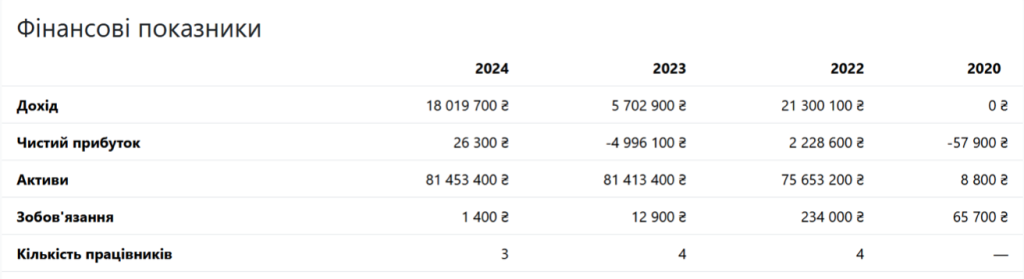
These figures, especially the 2024 profit of just ₴26,300 against ₴18 million in revenue, immediately raise suspicions of profit minimization to avoid paying taxes. The revenue itself looks suspiciously low for a gambling operator. For comparison, one of GGPoker’s competitors, VBET Ukraine LLC, reported total revenue of ₴3 billion in 2023 (including poker) and ₴2.3 billion in 2024.
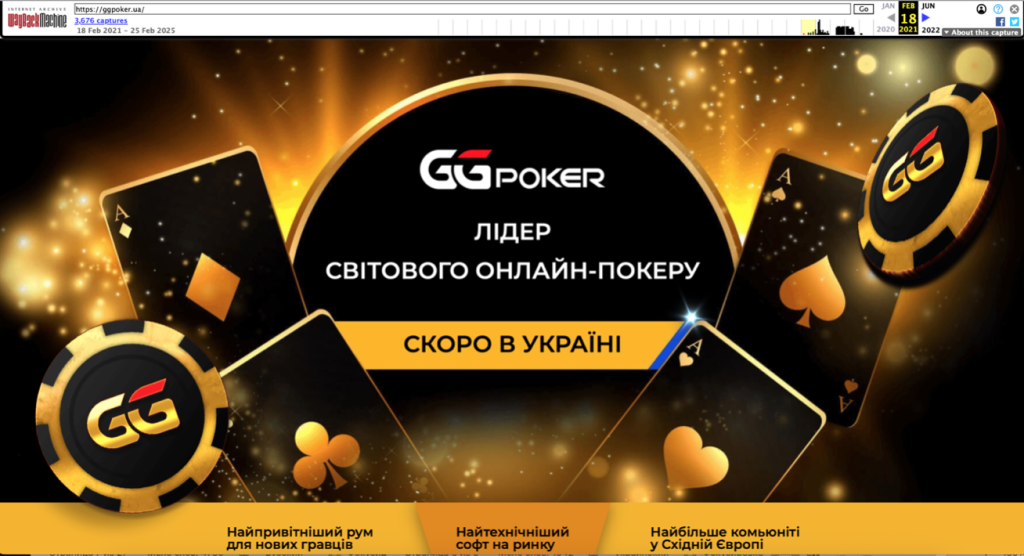
But the stronger sign that GGPoker operates illegally in Ukraine is its official website, ggpoker.ua — the domain licensed by NSUS UA through the Gambling and Lotteries Commission. Visiting the site shows no functioning online poker room. Instead, it looks like a placeholder page with a note claiming GGPoker donated “a million” for humanitarian aid, though it doesn’t specify whether that means hryvnias or dollars. According to the web archive, the site also wasn’t functioning in 2021–2022, back then only displaying a message that it was “under development”. In other words, for four years, the very website that holds the license has not actually been used for licensed activity.
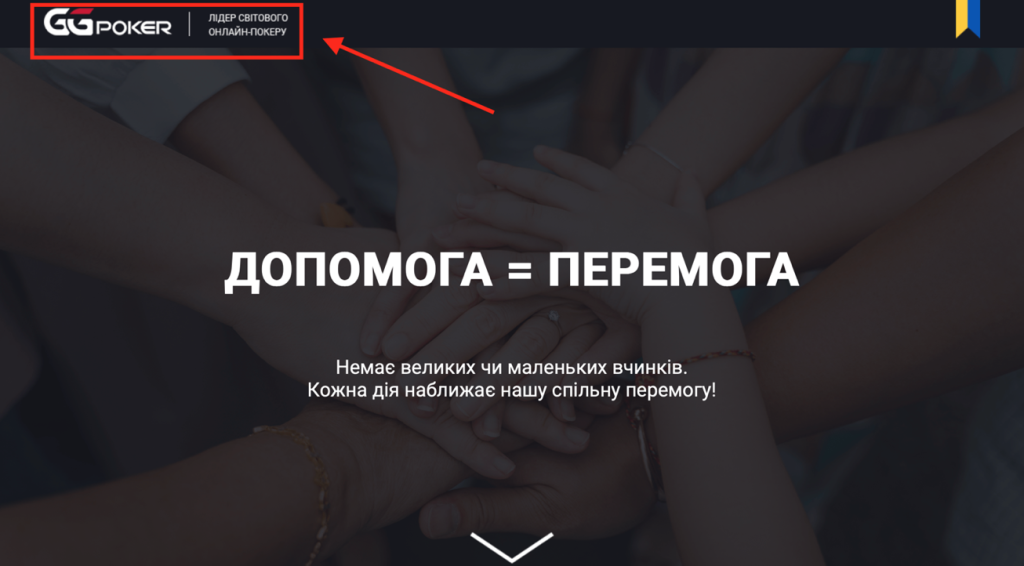
It looks suspicious because, in order to obtain its license, GGPoker actively promoted itself in Ukraine through Facebook, Instagram, and YouTube. But once NSUS UA LLC received the license, its activity on these platforms steadily declined, ending completely by 2024. The last post on the Facebook page ggpoker.ua appeared in May 2023, and the last Instagram update came in July 2024. Today, none of the Ukrainian GGPoker social media pages link to a registration site. The only remaining activity is an official Telegram channel and a players’ chat. Meanwhile, as already noted, the licensed website only hosts a page about a charity donation — there is no option to register and play poker online.
In reality, NSUS UA created only the appearance of legal operations. They launched advertising, set up a fake site, and presented it as if a global poker giant was about to open legally in Ukraine — all to secure a license from the Gambling and Lotteries Commission. Yet actual poker games never launched on the licensed domain.
Instead, they operate through numerous mirror websites. A simple search for “GGPoker” leads to ggpoker.com, which redirects users to https://ua7.ggpoker.com/ — one of several active mirrors where online poker under the GGPoker brand is fully operational. Other mirrors include https://ua1.ggpoker.com, https://ua5.ggpoker.com, https://ggpoker.in.ua, and https://signup.ggpoker.com — all clearly illegal.
Notably, on February 16, 2023, the Gambling and Lotteries Commission ordered access restrictions to https://ua1.ggpoker.com because it hosted unlicensed gambling. But the scheme’s organizers didn’t bother with compliance — they simply replaced “1” with “7” in the domain name. Now, the old domain with “1” redirects users straight to the active “7” version, which continues to operate freely, earning money outside the license. This is a direct violation of Ukrainian law and a criminal offense under the Criminal Code.
We tested the registration process on these unlicensed GGPoker sites. Instead of offering sign-up directly on the website, each of them prompted us to download a mobile app. While the app downloads, players are asked to create a free account by entering personal details and an address.
Once inside the app, users can choose any poker game after depositing funds. Deposits are processed primarily through cryptocurrency wallets, and withdrawals are made the same way.
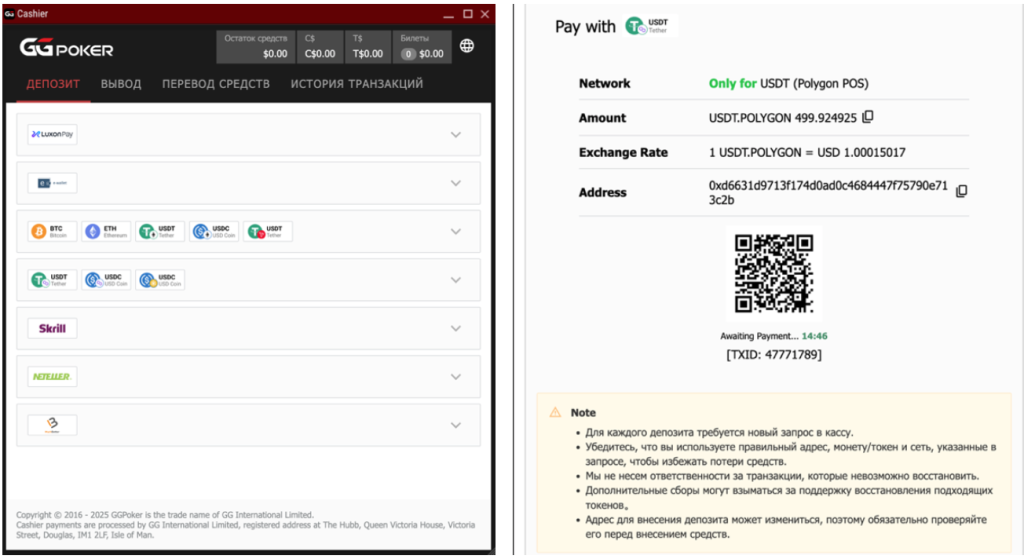
According to Article 42, Clause 5 of Ukraine’s Law “On State Regulation of Gambling,” “an online poker operator may conduct its activities via the website listed in the official register and/or through mobile applications on various operating systems”. This means it is a violation not only to run gambling on unlicensed mirror sites, but also through apps offered for download on those sites.
For example, in the Gambling Commission’s register, GGPoker’s competitor VBET lists both its licensed website and a mobile app. By contrast, GGPoker’s entry contains no mention of a licensed mobile app. In other words, the GGPoker app, just like its mirror sites, is illegal.
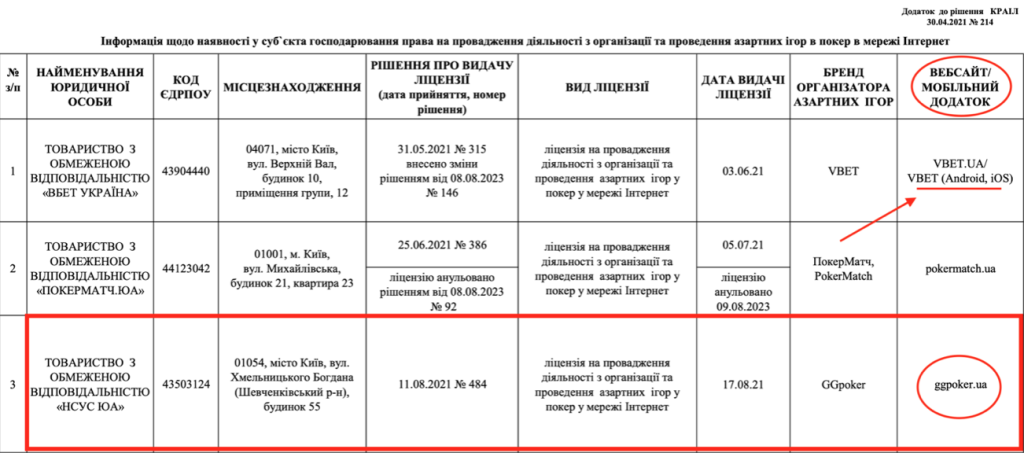
So what does this show? NSUS UA LLC clearly obtained its license only as a cover, to use when convenient. From the very start, the company never intended to operate legally or pay taxes into Ukraine’s state budget — it never conducted a single day of activity through its official licensed website. In other words, it never worked legally at all.
Instead, all financial flows go through unlicensed mirror sites and the mobile app, where payments are made exclusively in cryptocurrency, automatically pushing all transactions into the shadows.
A Lawyer for a Former Party of Regions MP and a Russian Citizen: Who Really Runs GGPoker and PokerOk
So who is behind this brazen poker operator that has been cheating the state for at least four years?
The GGPoker brand entered the international market in 2017. It is owned by the Canadian investment company NSUS Group, headquartered in Toronto with an office in Dublin. The group’s ultimate beneficial owner is South Korean citizen Kim Mansu. NSUS Group is also the 100% founder of the Ukrainian entity NSUS UA LLC, registered on February 10, 2020, and the owner of the GGPoker trademark in Ukraine since September 2020.
As of March 24, 2023, the director of NSUS UA LLC is Oleh Rachuk, a lawyer licensed since 2009 who also serves as director of the Legal High School educational platform.
According to media reports, Rachuk was an aide and personal lawyer to Borys Deich, a Party of Regions MP who openly supported russia’s annexation of Crimea and voted for the notorious “dictatorship laws” of January 16, 2014.
Rachuk’s legal background likely proved useful in managing illegal gambling operations. He became director of NSUS UA only after the company was already a suspect in four separate criminal proceedings.
Court records show NSUS UA was investigated for unlicensed gambling operations and large-scale tax evasion. Four cases were opened: No. 42022000000000938 (July 13, 2022), No. 72022000400000003 (September 19, 2022), No. 12020000000001013 (October 16, 2022), and No. 12023000000000430 (February 10, 2023).
Investigators found that beyond unlicensed GGPoker sites, another group of illegal platforms was running under the brand GGPokerok — including play.pokerok500.com and its mirrors play.pokerok930.com, play.pokerok940.com, play.pokerok960.com, and others. All these websites share the same interface and services as GGPoker sites, showing they belong to the same owner.
Investigators confirmed that the sole owner of both brands is NSUS Group. The difference lies only in target markets: GGPoker focuses on Europe, while GGPokerok targets post-Soviet states. As a result, GGPokerok operates in both Ukraine and russia, including russian-occupied territories such as annexed Crimea. To service this market, the platform offers russian-language support, russian payment systems, and mirror sites tailored for users in russia.
“The online casino GGPokerok was organized and operated in Ukraine without the necessary licenses or permits, using uncertified equipment not connected to the State Online Monitoring System. It relied on payment systems and bank accounts registered to proxies in Ukraine and abroad. Funds were withdrawn through cryptocurrency exchanges, allowing organizers to conceal the real scale of operations and channel money into the shadow economy for further laundering, including transfers to russia,” investigators wrote in the case files.
Key suspects in these proceedings included then-director of NSUS UA Ihor Kalyahin and the company’s chief accountant Nataliia Hryvnak. Investigators also identified Russian citizen Ivan Bryksin, head of the GGPokerok project, as one of the organizers of the illegal gambling scheme.
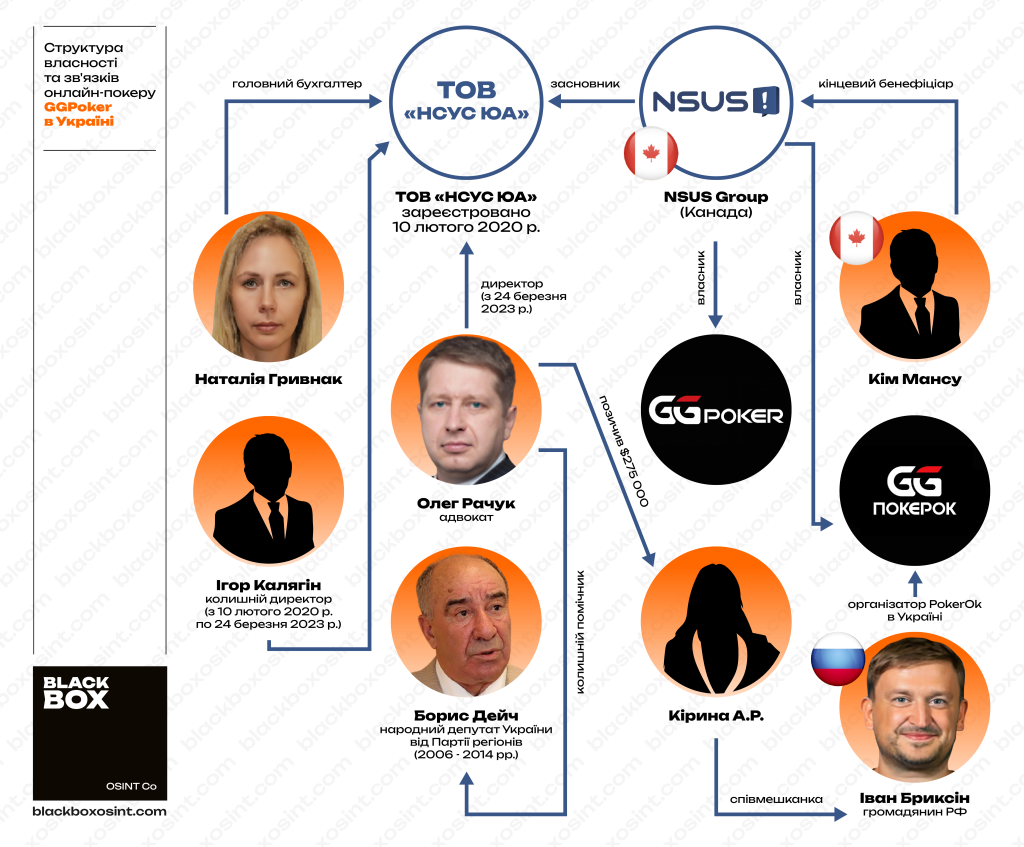
Bryksin lived in Ukraine, in the village of Romankiv near Kyiv, where in September 2022 investigators searched his home. They seized equipment, documents, mobile phones, $392,500 in cash, and €19,000. When asked about the origin of the money, Bryksin’s lawyer claimed it belonged not to him but to his partner. She further insisted that part of the money, specifically $275,000, was supposedly a loan. And from whom? From Oleh Rachuk, who just six months later became the new director of NSUS UA LLC.
As for the series of criminal cases, they likely ended the same way such cases often do in Ukraine, with no real consequences. Afterward, russian citizen Bryksin did not attempt to secure a license for GGPokerok in Ukraine. Instead, he rebranded the platform, dropping the “GG” and renaming it simply PokerOk. Officially, this was presented as a move away from the international GGNetwork brand. But as of 2025, PokerOk still operates as part of GGNetwork and NSUS Group, running on their infrastructure.
Today, PokerOk continues to operate both in Ukraine and in russia. Players from russia access the rooms through VPNs and mirror sites. Open sources, including forum posts from 2024, confirm that Ukrainian players also continue registering and playing on PokerOk.
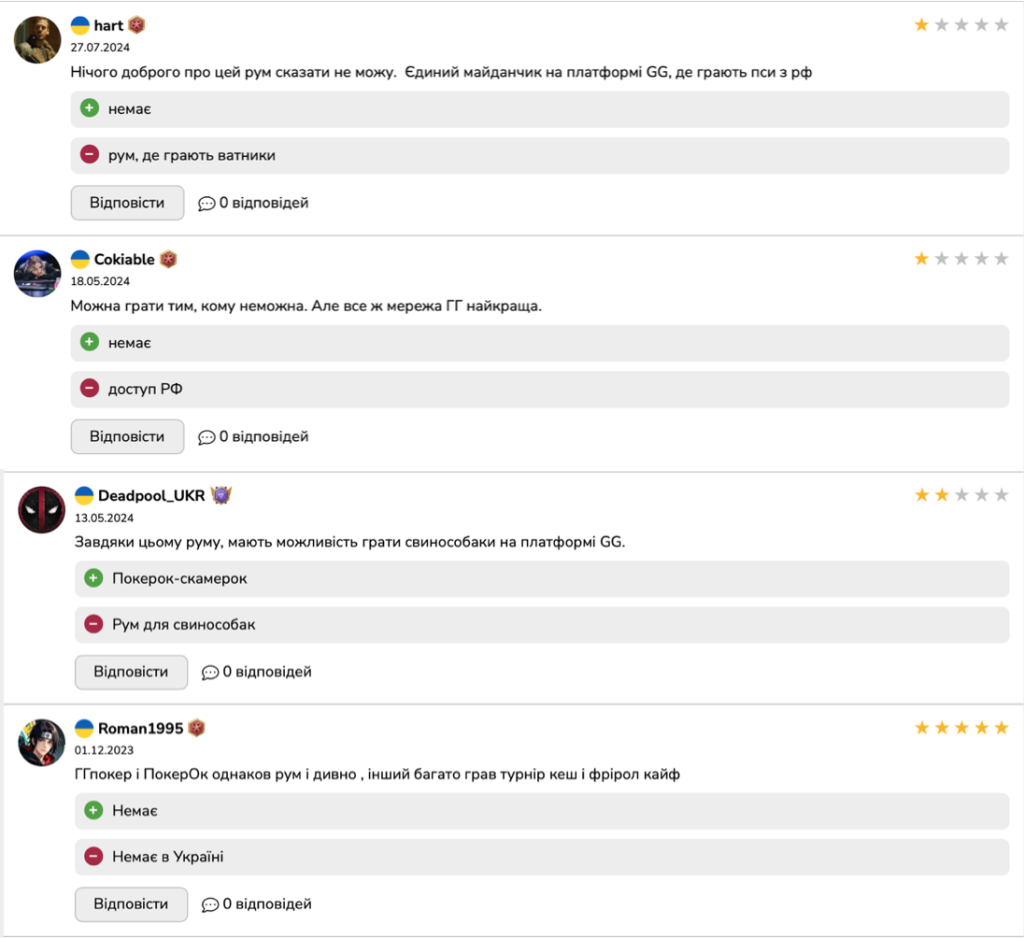
According to Russian media, Ivan Bryksin remains the acting CEO of PokerOk. In 2025, as a professional poker player, he won the Grand Final of the MPP Luxon Pay 2025 tournament. This indicates he is freely traveling abroad and has not been detained in connection with the criminal cases in which his home was searched.
However, according to BlackBox OSINT, criminal proceedings opened in 2022–2023 still contain crucial evidence about how organizers of illegal gambling through GGPoker and GGPokerok funneled large sums into cryptocurrency. Investigators discovered nearly $29 million (₴800 million) in Binance wallets belonging to the main suspects, including Ihor Kalyahin. That amount translates into roughly $4.22 million in unpaid taxes to the state budget.
Between November 29, 2018, and September 21, 2022, cryptocurrency wallets linked to NSUS UA executives received deposits totaling more than $14.91 million in various digital currencies, including USDT, USDC, BUSD, MBOX, NEAR, BTC, DOT, ETH, SOL, and BNB. During a shorter period, June 4, 2019, to September 20, 2022, they withdrew more than $13.5 million from those wallets.
And this is only the data available up to fall 2022. One can only imagine the sums that continue flowing today into the wallets of Oleh Rachuk, Ihor Kalyahin, and Ivan Bryksin, bypassing taxation. Throughout this time, not a single organizer of the illegal poker network has been held accountable. The Gambling Commission (KRAIL) has issued just one decision — blocking a single mirror site, which was immediately replaced by another.
Can a country fighting for survival in the fourth year of full-scale war afford such inaction toward those illegally earning millions right under its nose? The question is rhetorical.
ClubGG: How GGPoker’s Sister Platform Quietly Hosts Illegal Poker Tournaments
Clearly following the principle of not putting all eggs in one basket, Rachuk and Bryksin decided that if the already exposed GGPoker and PokerOk were to “fall”, they needed additional platforms to keep profiting from illegal gambling. As a result, the Ukrainian segment of social media has been flooded with ads for unlicensed poker clubs operating through ClubGG — one of the most popular online poker apps, developed by the GGNetwork in January 2021.

Officially, ClubGG presents itself as a social gaming platform for “fun poker” without real money, as stated in the app’s terms. But of course, no one builds an entire social network just to play poker “for fun” without cash. In reality, countless clubs on the platform run money games.
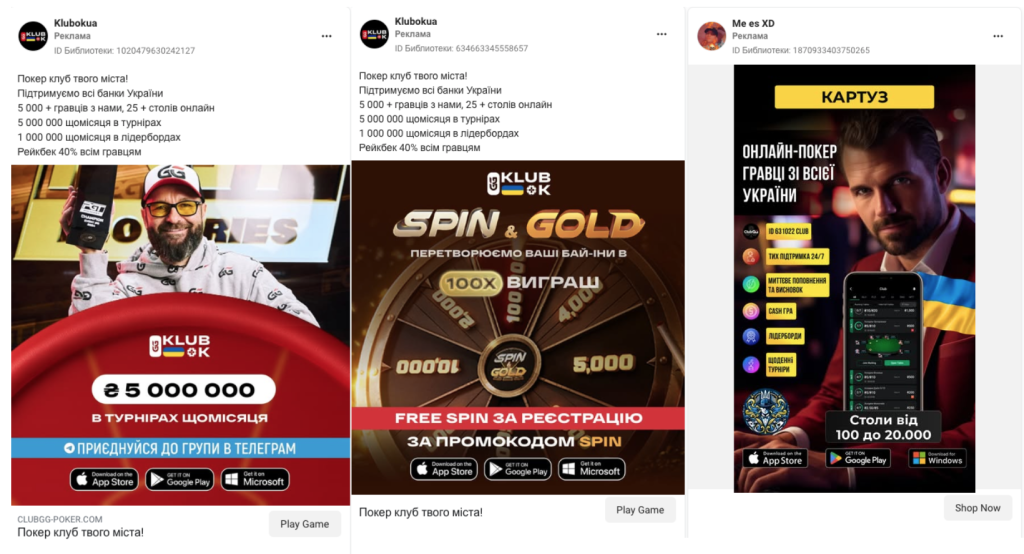
The Facebook Ad Library, which aggregates ads across Meta platforms, contains dozens of ads targeted at Ukrainian users promoting poker clubs based on ClubGG. Despite the app’s formal positioning as “free entertainment”, these private clubs openly advertise cash prizes worth millions of hryvnias.
The ads lead to simple landing pages, which then direct potential players into private Telegram groups.
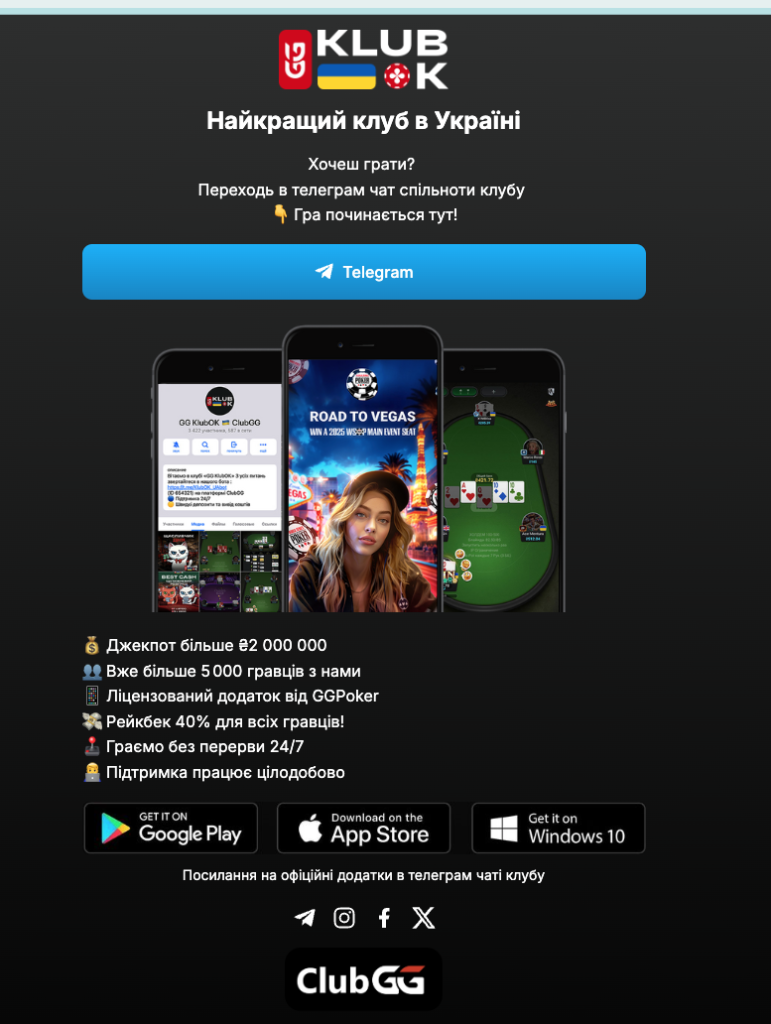
For example, websites available at the time of publication, opggcxv.tilda.ws/ua and ggklub.mssg.me/288, are typical funnels used to draw players into illegal poker rooms.
As an experiment, we joined at least five clubs on the ClubGG platform that offered balance top-ups for real money through various Telegram bots and operators. While ClubGG allows any user to create a club where the administrator can assign chips in any amount to any member, we found a major difference between newly created virtual clubs and those that professionally recruit players for real-money games.
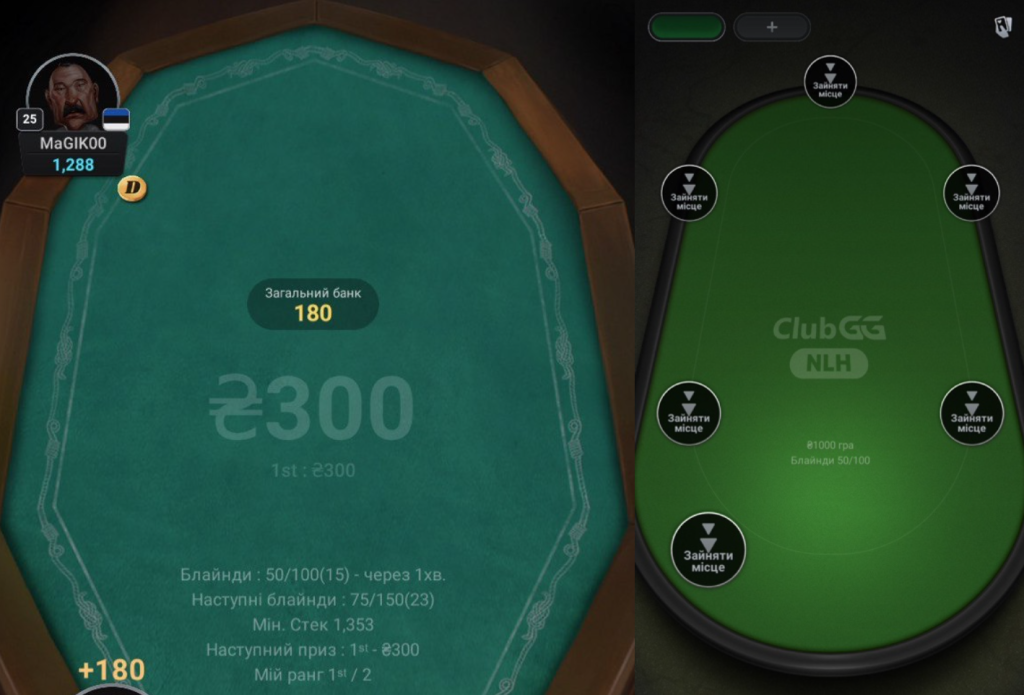
For example, in a newly created test club it is impossible to set the game currency in hryvnias — only numbers are available, meaning virtual chips. At the virtual table of a newly created club, the standard ClubGG branding is displayed. By contrast, in clubs where games are played for real money, the prize pool of each specific table is shown.
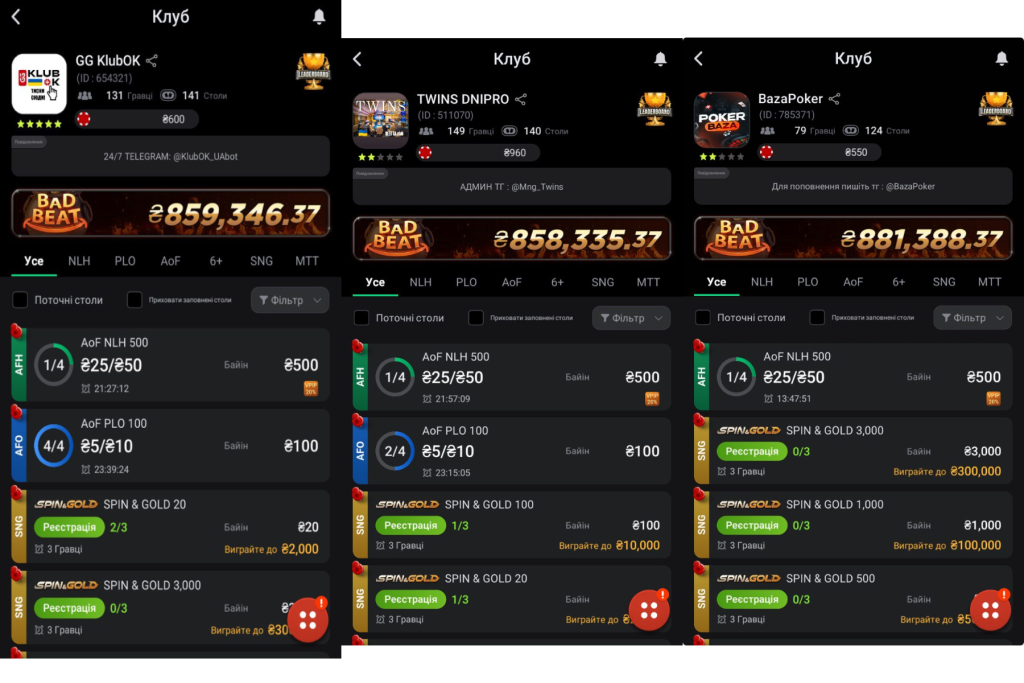
Moreover, the promo sections inside the app don’t even hide the fact that games are played for real money. This suggests that some of the larger clubs may be colluding with ClubGG administrators and receive expanded options for promotion and tournament setup. Alternatively, these big money clubs could be operated directly by ClubGG itself.
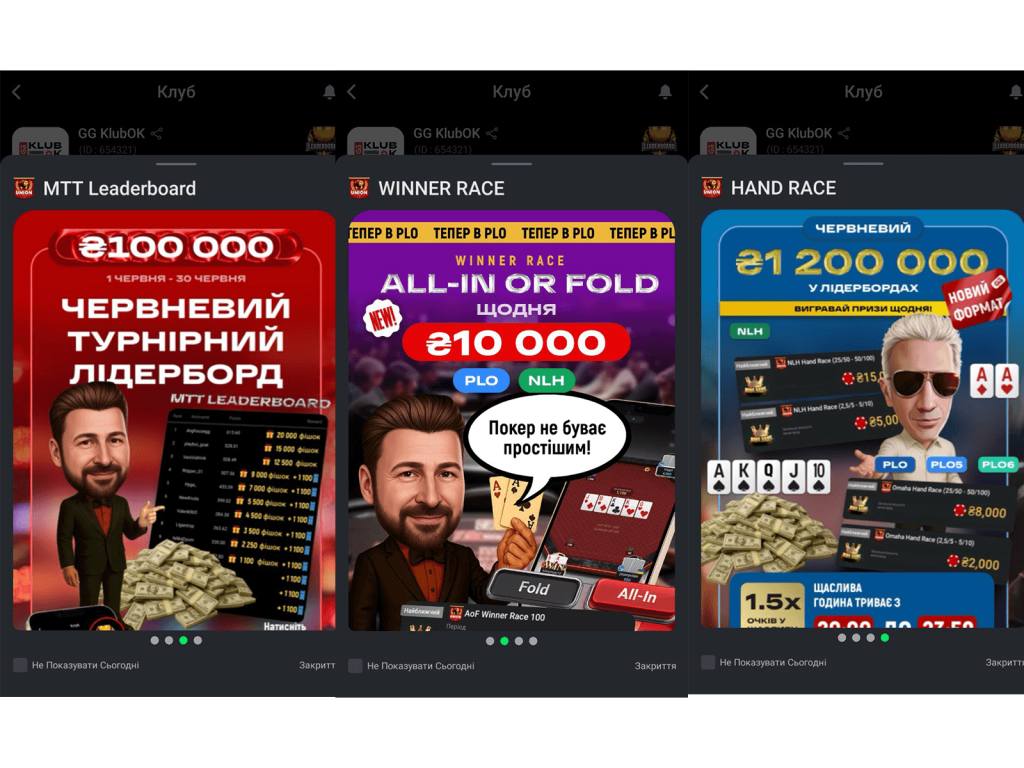
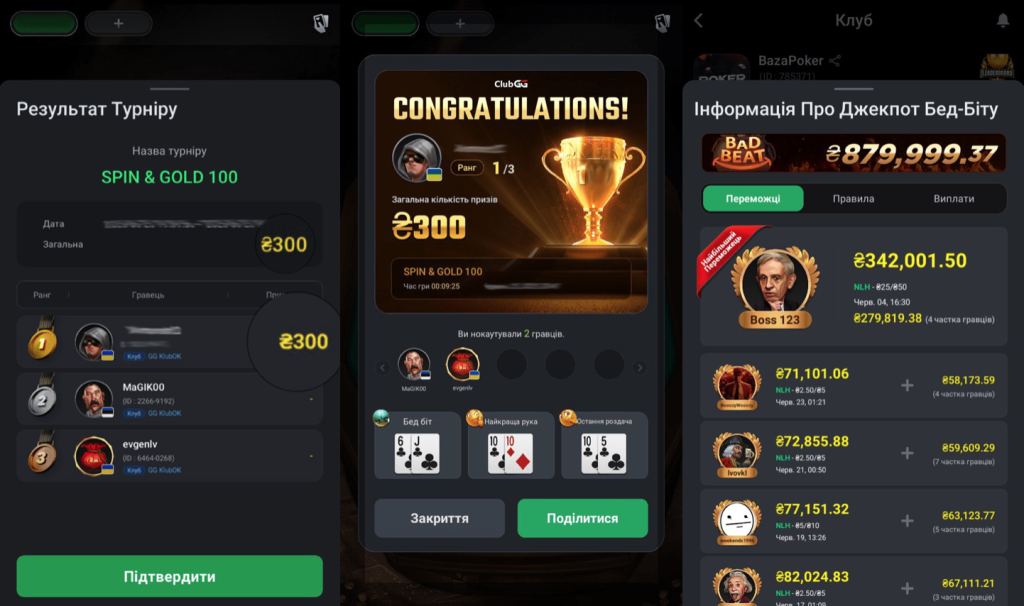
When seated at a virtual table, bets are also clearly presented as real-money wagers. After a game ends, all payouts are shown in hryvnias as the currency of winnings. Jackpots likewise display the prize amounts directly in hryvnias.
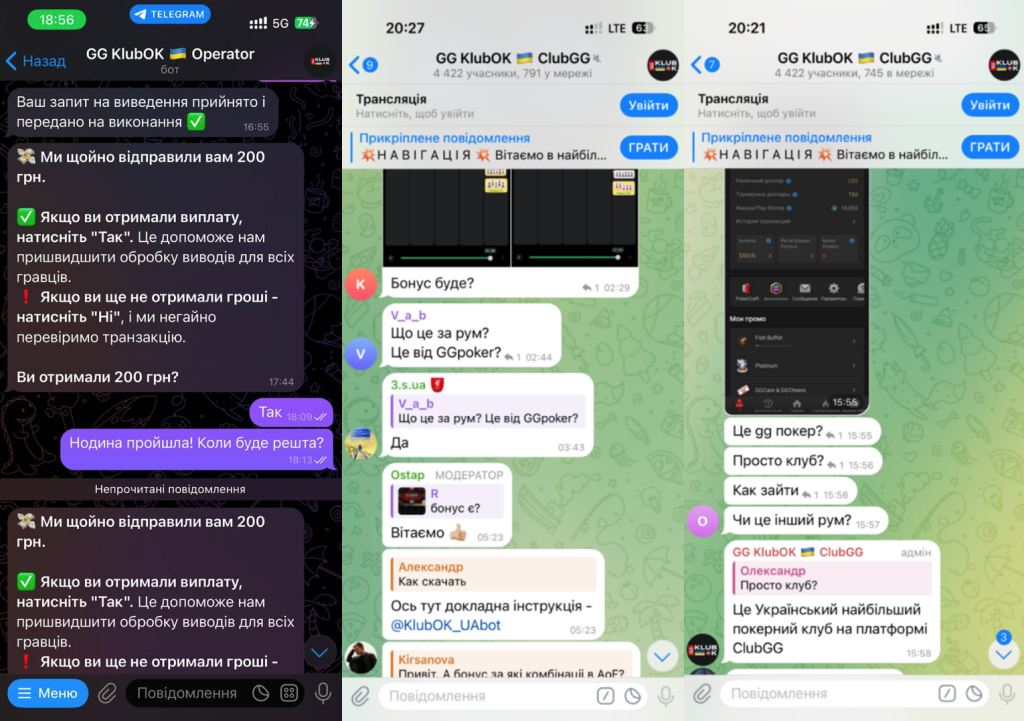
Ads posted on social media lead to Telegram channels or bots for virtual clubs operating on the ClubGG platform. Among the largest are channels like @KapTy3_ClubGG, @TWINS_UA_BOT, @VSpokerUA_bot, and others. Typically, these channels immediately provide instructions on how and where to transfer money in order to top up an account and join a club.
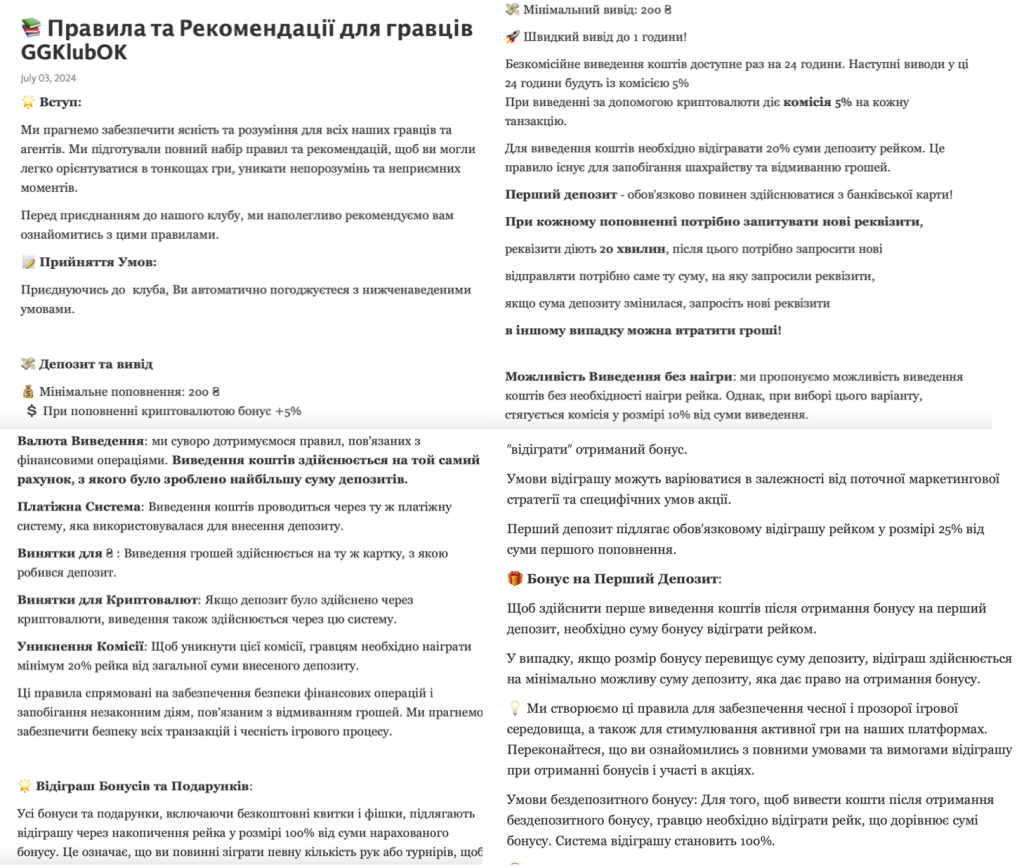
The biggest club, KlubOK, even has its own detailed rules. They state right away that the minimum deposit to play is ₴200. Doesn’t sound like “play money”, does it? Interestingly, the organizers encourage players to make deposits in cryptocurrency, offering a +5% bonus for topping up in crypto. The reason is obvious — crypto is easier to hide and easier to cash out.
The rules also specify that for each deposit, players must request new payment details, which are valid for only 20 minutes before new ones have to be generated.
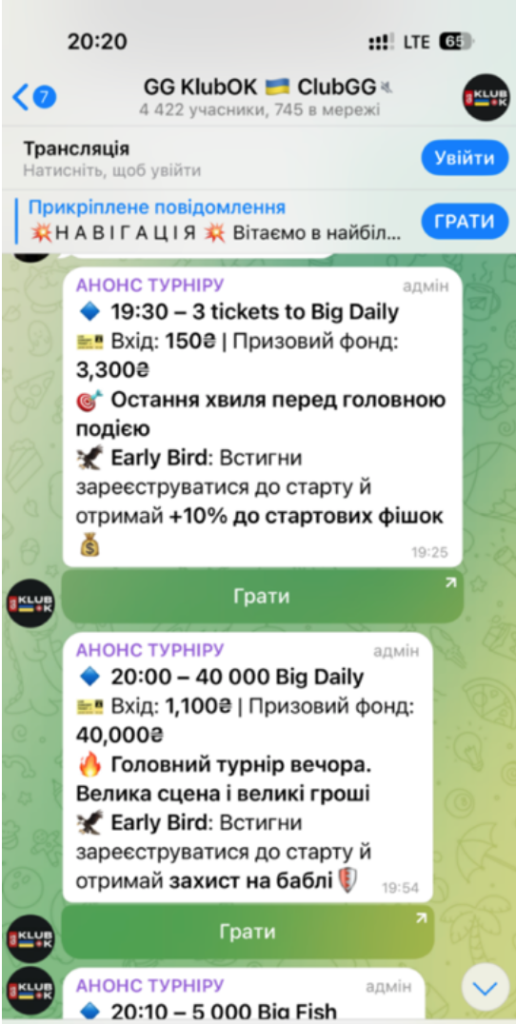
The channels actively promote tournaments and announce games with cash stakes. To top up a virtual chip account, players are offered the option to transfer deposits to a bank card or use cryptocurrency.
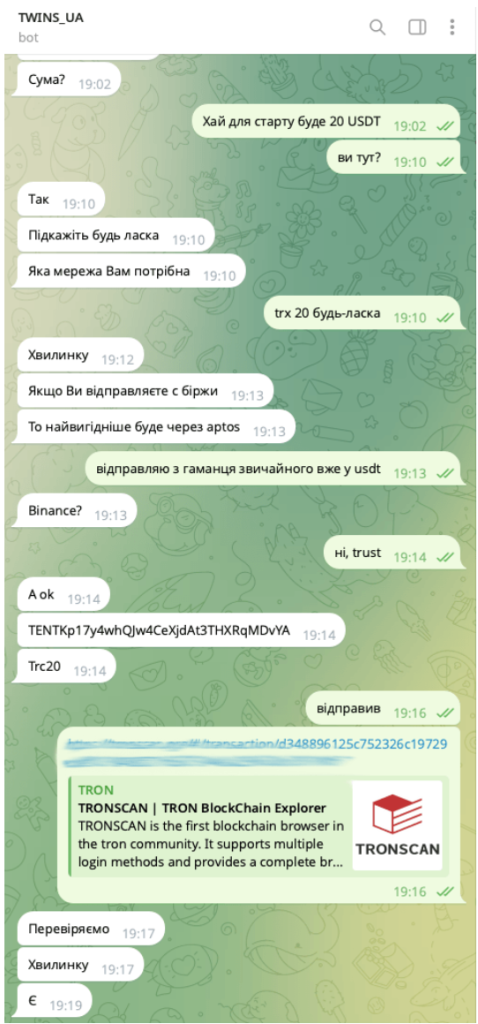
We conducted an experiment and attempted to make cash deposits in several poker clubs on the ClubGG network. In the chatbots of the Kartuz and Twins clubs, we were immediately given payment details and our deposits were accepted.
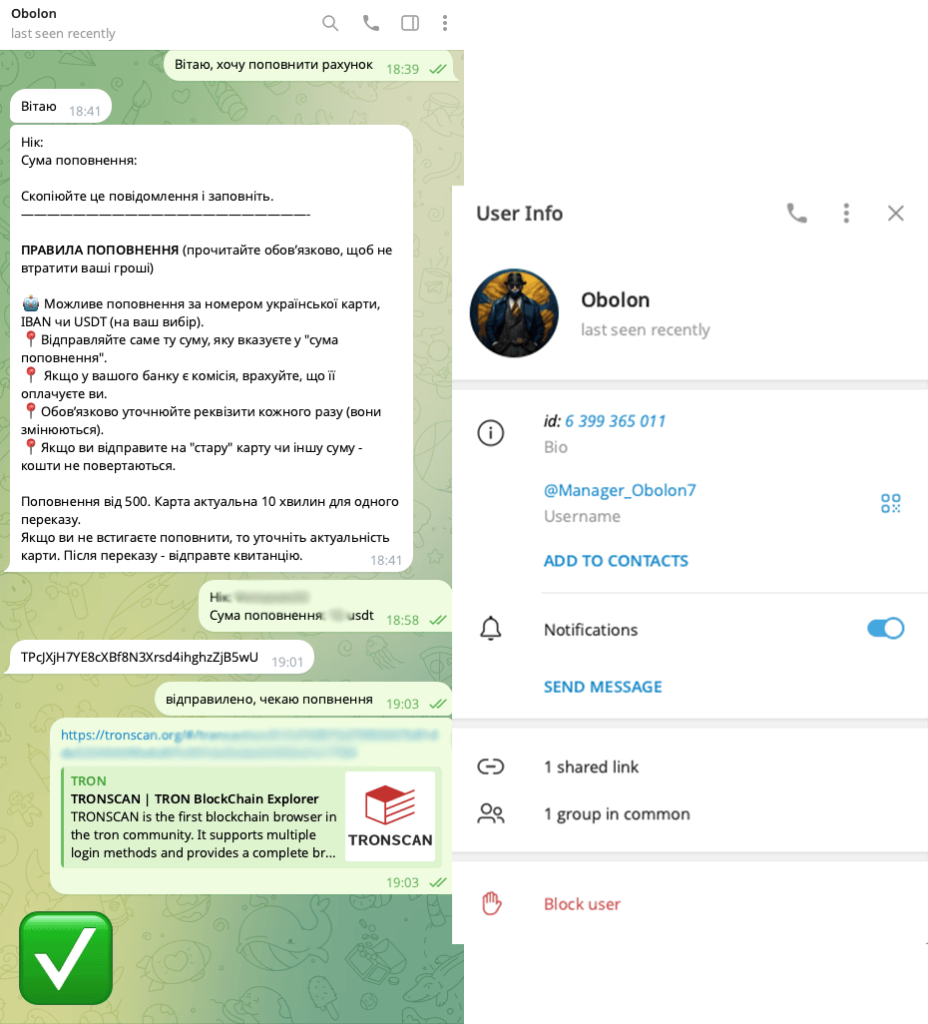
An analysis of the cryptocurrency wallet belonging to the Kartuz club showed that it was created just two months ago. At the time of review, its balance was only $6.24, but during those two months it had already received $18,900. This is clearly a transit wallet, used to quickly move funds to main accounts, exchange services, or for direct cash-outs.
An even more telling example is the Twins club. Its wallet, created 3.5 months ago, had a balance of just $23.67 at the time of analysis, but during that short period it received a total of $50,890. Again, this indicates a transit wallet where funds don’t stay, they are immediately transferred to organizers’ accounts.
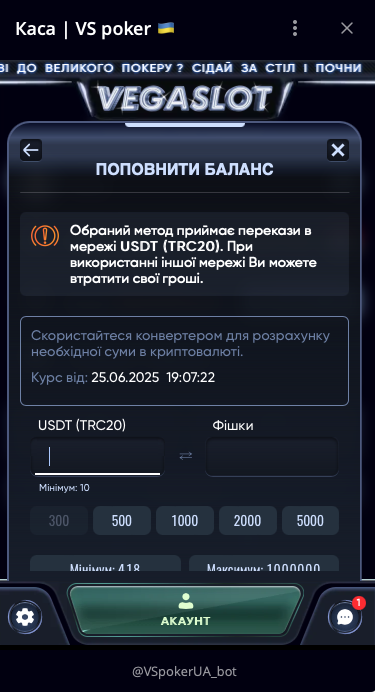
The Vspoker club went even further and launched its own miniapp for deposits, essentially creating an unlicensed online casino inside a mobile app. After deposits are made, club administrators credit chips within their respective ClubGG clubs. In some cases, balances are even displayed directly in hryvnias. Quite the “fan club for fun poker”, where in reality tens of thousands of dollars are flowing through illegal games.
Is It Really That Hard to Hold ClubGG and GGPoker Accountable for Unlicensed Gambling?
In club chats, we observed player discussions. Unsurprisingly, the conversations often revolve around typical issues of illegal gambling: numerous complaints about problems withdrawing even small amounts, technical failures, payment delays, and other issues common to unlicensed operators.
Particularly telling are the discussions about the direct link between ClubGG and GGPoker. Players openly state that ClubGG is part of the GGPoker ecosystem, confirming our findings about the systemic nature of this network’s illegal operations in Ukraine.
And Ukraine is far from the only country where ClubGG is used to organize real-money online poker games. Even a brief look at the Facebook Ad Library revealed that the same scheme operates in Israel and India: an ad leads to a messenger chat with a manager, then to entry into a closed ClubGG club, followed by deposits through that manager.
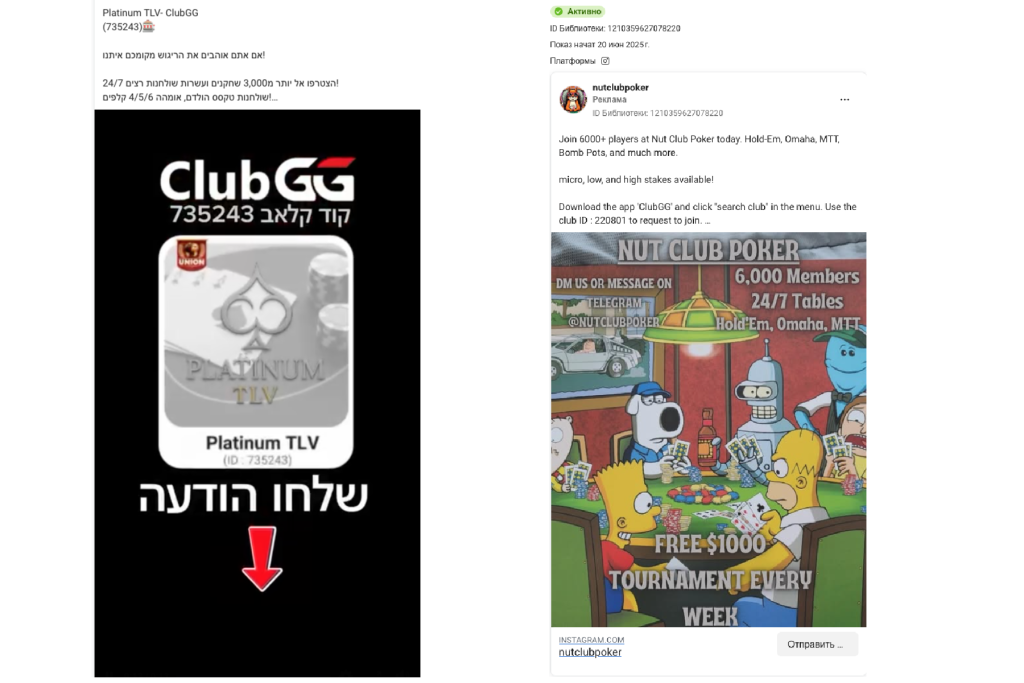
In Ukraine, ClubGG continues to operate virtually without obstacles. But in Kazakhstan, law enforcement has already cracked down. In fall 2024, authorities dismantled a large online casino network. According to the local Financial Monitoring Agency, 20 Kazakh citizens were running poker games through the free ClubGG app and a Telegram channel. For organizing the illegal gambling business, they earned 10% of the turnover. Since the start of the year, the online casino had generated more than $114,000 in revenue. Police carried out searches, seizing equipment, cash, and weapons. They also shut down the Telegram channel with 4,000 subscribers that was used to run the operation.
This proves it is possible to identify and hold accountable the organizers of illegal gambling. It just requires the will. In our own investigation, without the powers law enforcement has, we were still able to uncover, for example, an individual who actively promotes an illegal poker room on social media.
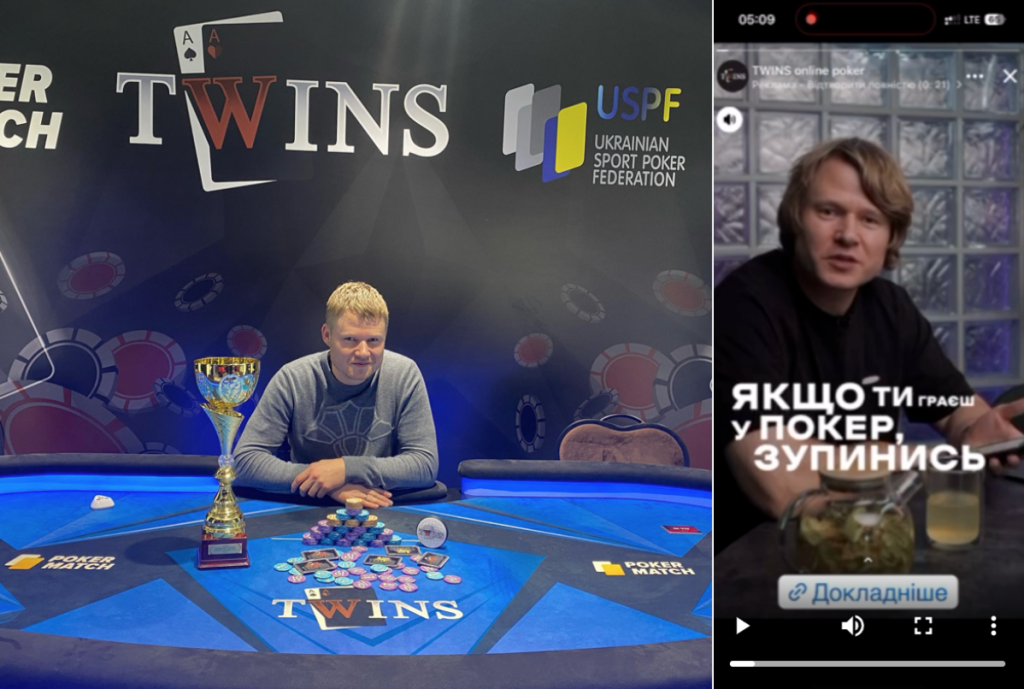
This individual is 39-year-old Stanislav Valeriyovych Anufriiev, who as of 2019 was registered at 2 NovoOrlovska Street in Dnipro, married with three children. Open sources show that he is himself a professional poker player and a board member of the NGO Dnipro Club of Sports Intellectual Games. His testimony could likely provide valuable information and evidence against the organizers of illegal online poker, who are making substantial profits while avoiding taxation.
When the Ukrainian government legalized the gambling market in 2020, it was expected to bring billions of hryvnias into the budget — funds desperately needed today to support the frontline. But, as it turned out (and somehow came as a surprise), legalization requires strict oversight and real accountability for those who break the law and continue operating without a license.
Instead, the case of GGPoker shows systemic and years-long illegal activity, carried out openly while millions of dollars are funneled into cryptocurrency, right under the state’s nose. Shockingly, this continues even after four criminal proceedings were launched. Clearly, neither the Gambling and Lotteries Commission, nor the police, nor the State Bureau of Investigation have been able to ensure that Ukraine’s legalized gambling market truly operates legally, with all money taxed and directed into the state budget, rather than the pockets of enterprising individuals, including citizens of the aggressor state. Unfortunately.