
Following the adoption of a law by Ukraine’s parliament granting the Prosecutor General authority over the country’s anti-corruption bodies, NABU and SAPO, public debate has intensified around the effectiveness of these institutions. The question is simple: where are the convicted top-level corrupt officials?
In the first part of our investigation, we examined where the cases of Tetiana Krupa, Mykola Tyshchenko, Maksym Stepanov, and Vsevolod Knyaziev have stalled.
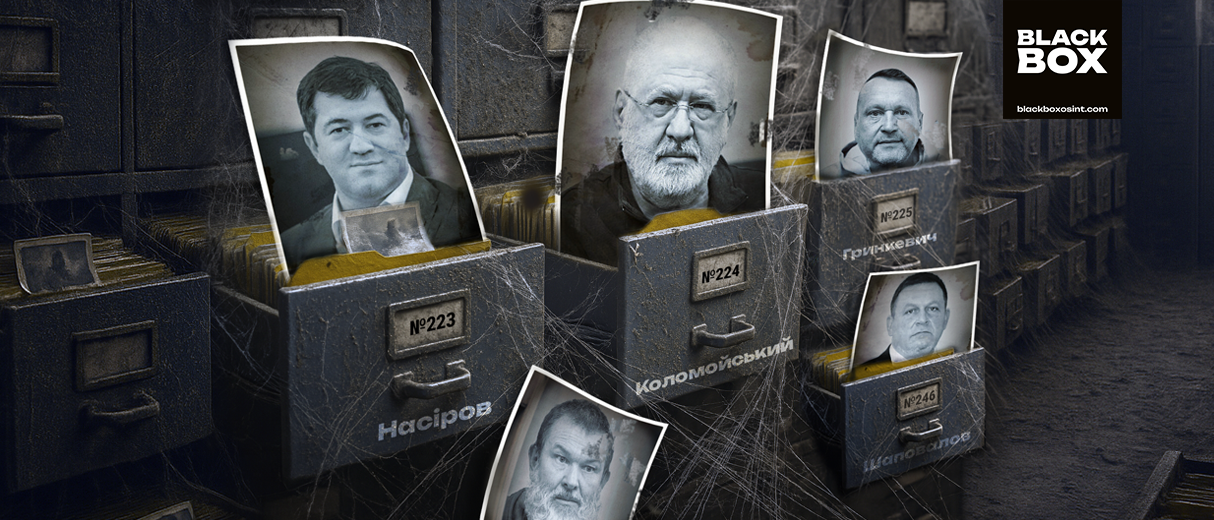
In this second part, we looked into the status of cases involving other high-profile figures: oligarch Ihor Kolomoisky, former tax chief Roman Nasirov, Lviv businessman Ihor Hrynkevych, former Deputy Defense Minister Vyacheslav Shapovalov, and FSB agent within Ukraine’s Security Service, Oleh Kulinych. Spoiler: in some cases, it’s doubtful we will ever see a verdict. But overall, the trend is the same — most cases stall not during the investigation stage, but once they reach Ukraine’s courts.
How Ihor Hrynkevych Organized a Gang to Rob the Ukrainian Army of ₴1 Billion
The name Hrynkevych is now known across Ukraine and has practically become synonymous with wartime corruption. In January 2023, Lviv businessman Ihor Hrynkevych set out to create a criminal organization with the aim of systematically profiting from supplies to the Ukrainian army. Controlling three companies that had already fulfilled government contracts for the Ministry of Defense in 2022, and knowing this would serve as a basis for officials’ trust, Hrynkevych together with his son Roman, who at the time had established connections in the Ministry’s logistics department, decided once again to use their companies to deliver substandard clothing and uniforms to the army, siphoning off state funds.
Three companies took part in his scheme: Trade Lines Retail LLC, headed by Hrynkevych’s longtime associate Volodymyr Tymkiv; Citygrad Construction Company LLC, directed by Viktor Kuzminskyi; and BAM LLC, managed by Ihor’s son, Roman Hrynkevych.
On February 21, 2023, these three companies signed 23 contracts with the Ministry of Defense for the supply of military uniforms worth more than 1.5 billion hryvnias. To substitute quality goods with defective and cheaper ones, Kuzminskyi, Tymkiv, and Roman Hrynkevych submitted false information in official documents about the quality of the clothing, which in reality did not meet the declared standards. To make sure the shipments were accepted without issues at military units, Ihor Hrynkevych assigned another member of the criminal group, Andriy Kolotilo, the role of official representative of all three companies, tasked with resolving any “problems” on the ground.
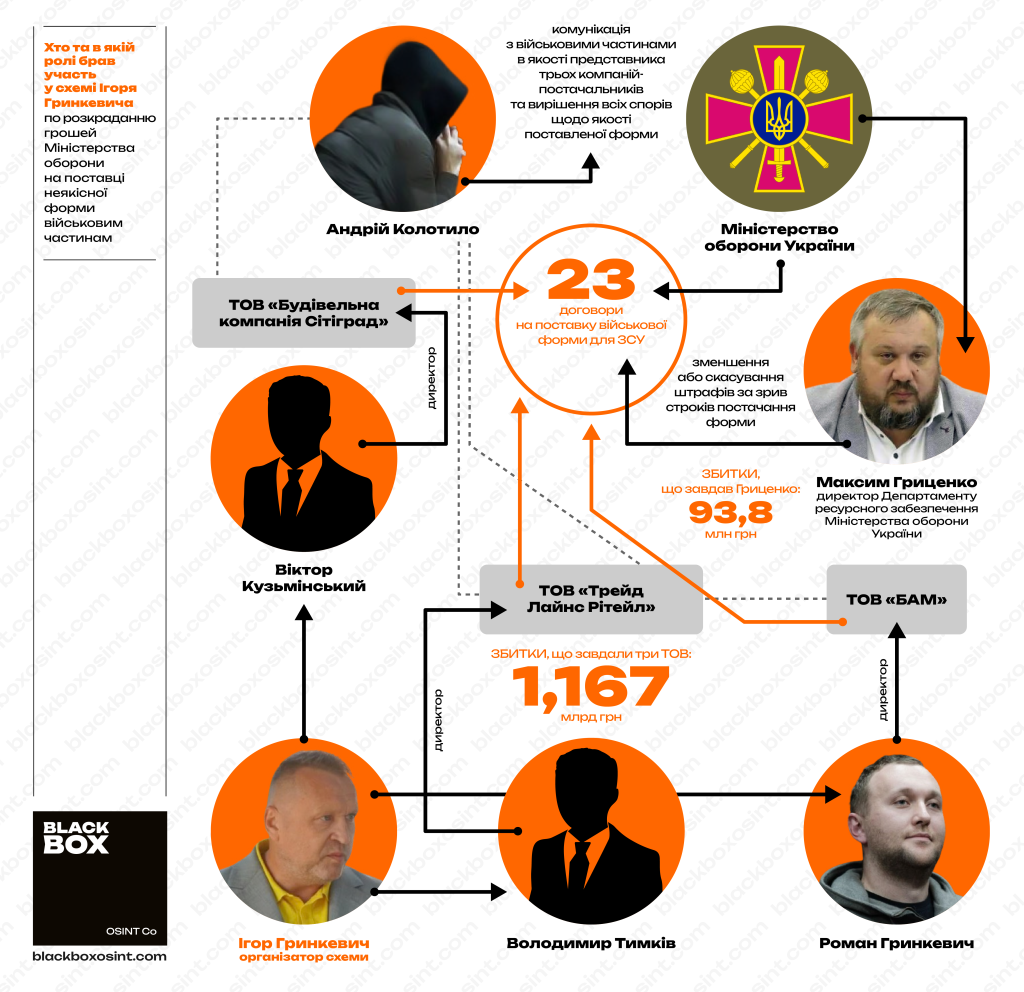
According to the State Bureau of Investigation, Hrynkevych and his group defrauded the Ministry of Defense of 1.176 billion hryvnias. In October 2023, the Bureau opened criminal case No. 62023000000000876 over the supply of low-quality uniforms for the Armed Forces. In November 2023, law enforcement searched the Ministry’s logistics department, a military unit, and the Chaiky customs post. They seized procurement documents, powers of attorney, product samples for examination, and part of the goods that Hrynkevych’s companies had already reported as delivered and paid for. On the same day, searches were also conducted at companies controlled by Hrynkevych and his family, with their property seized.
In January 2024, Ihor Hrynkevych, his son Roman, as well as Volodymyr Tymkiv, Viktor Kuzminskyi, and Andriy Kolotilo were formally charged with wartime fraud related to the supply of substandard uniforms to the army worth nearly 1 billion hryvnias. In response, the Ministry of Defense began procedures to terminate contracts with the Hrynkevych family’s companies.
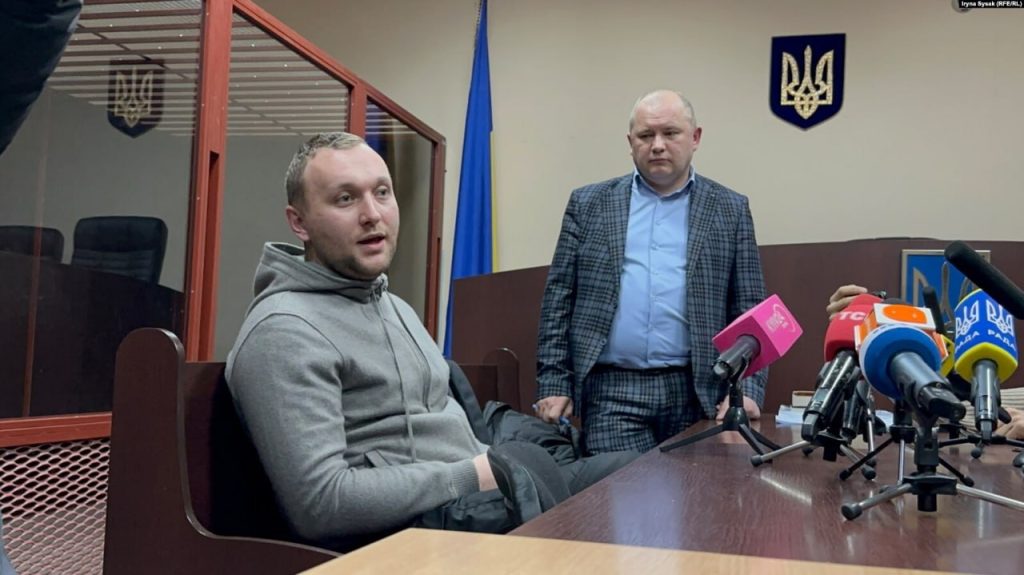
As of today, all defendants are held in pre-trial detention. Initially, the courts set bail at 500 million hryvnias for each, but with every extension of detention, the bail amounts have been reduced. For example, on May 5, 2025, the court extended Roman Hrynkevych’s detention until July 3, 2025, while lowering his bail to 202.876 million hryvnias from the original 500 million. Volodymyr Tymkiv’s bail was reduced to 75.7 million, Viktor Kuzminskyi’s to 90.84 million, and Andriy Kolotilo’s to 60.56 million.
In January 2024, the court also froze 34 hryvnia accounts, 16 dollar accounts, 15 euro accounts, and one account in Polish zlotys belonging to three companies involved in the Hrynkevych fraud scheme — Trade Lines Retail LLC, Citygrad LLC, and BAM LLC. In addition, two apartments, four land plots totaling nearly three hectares, a residential house, and a garage owned by Ihor Hrynkevych’s wife, Svitlana, were seized.
On January 19, 2024, an investigative judge of Kyiv’s Pechersk District Court froze the corporate rights of 22 companies linked to the Hrynkevych scheme. The ruling also prohibited the disposal or use of their real estate assets, which included: a roadside service complex on the Kyiv–Chop highway, a carpentry workshop, a sawmill, a checkpoint building, warehouse buildings, a transformer substation, a repair and mechanical workshop, a recreational complex with a total area of 1,206.8 square meters, as well as a chlorination facility and pumping station.
In total, through a series of court rulings, authorities seized from Hrynkevych seven luxury cars, 17 land plots, three residential houses, 10 apartments, 17 commercial properties, 66 bank accounts, and the corporate rights to 22 companies. And this is only in Ukraine. In addition, the Hrynkevych family’s apartment, house, and nine land plots in the Czech Republic were also seized.
How Ihor Hrynkevych Tried to Buy His Way Out with Half a Million Dollars
After learning that a criminal case had been opened against him and that his property had been seized and frozen, Ihor Hrynkevych decided to offer a bribe in order to recover the assets and “settle” the case. He obtained the phone number of the deputy head of the State Bureau of Investigation’s investigative department and sent him a message on Signal: “Good afternoon. I’m from mutual friends. When can I call?”
Hrynkevych later phoned him and proposed a meeting. That same day, around 2:00 p.m., he met the deputy head of the SBI investigative department at a WOG gas station on Sevastopolska Square in Kyiv. During their conversation, Hrynkevych asked him and other SBI officers to help return the seized assets to his companies. However, the officer, realizing Hrynkevych’s actions were illegal, immediately filed a crime report with investigators after the meeting.
On December 25, 2023, Hrynkevych again messaged the SBI officer on Signal: “Christ is Born. When do we meet?” but received no reply. That same day, the SBI opened a new criminal case against Hrynkevych, Case No. 62023000000001135, for attempting to offer an unlawful benefit. Two days later, Hrynkevych called him again via Signal, receiving the response: “Good afternoon, can’t talk now, write”. Hrynkevych then wrote: “Good afternoon. I met with our friends, everything was explained, ready to meet tomorrow. If ok — let me know where and when. Thanks”. They agreed to meet again on December 28, 2023, at the same WOG gas station. By then, the SBI officer was already acting under the control of law enforcement.
During that meeting, Hrynkevych told the officer he was prepared to hand over a $500,000 bribe in exchange for assistance in recovering his companies’ seized property. On December 29, 2023, they arranged a meeting at “VERY TASTY CAFE” on Symon Petliura Street, 5 in Kyiv, where Hrynkevych gave the deputy head of the SBI’s investigative department $500,000 in cash — equivalent to ₴18,991,200 at the official NBU exchange rate on that date. Immediately after handing over the money, Ihor Hrynkevych was arrested on the spot.
On December 30, 2023, he was formally charged, and the money given to the SBI officer was seized. The court ordered pre-trial detention, with the alternative of bail set at ₴429.44 million. To secure possible confiscation, the court froze five of his apartments, seven land plots, and a garage.
On July 8, 2024, the indictment in the bribery case was filed by prosecutors with the Shevchenkivskyi District Court of Kyiv, where proceedings have now been ongoing for over a year.
As for the case involving profiteering from supplying low-quality uniforms to the Armed Forces, that indictment only reached the Solomianskyi District Court of Kyiv on January 15, 2025. Hearings in that case are also still underway.
How Deputy Defense Minister Vyacheslav Shapovalov Supplied the Army with Faulty Body Armor, Costing the State Nearly ₴1.5 Billion
Another major case with no verdict is that of Vyacheslav Shapovalov, former Deputy Minister of Defense of Ukraine in charge of procurement and supplies. He is accused of embezzling state funds and delivering substandard military equipment, causing losses of 1.4 billion hryvnias to the state.
Alongside him, the case involves Bohdan Khmelnytskyi, former head of the Defense Ministry’s procurement department (predecessor to Maksym Hrytsenko), and Oleksandr Fydyna, then head of the quality control unit. Despite the seriousness of the charges and the evidence gathered, the criminal case, opened back in 2022, has still not reached court. Why has this happened, and where did the investigation stall?
In February 2023, Shapovalov was officially charged in criminal case No. 62022000000000370, which had been opened on June 9, 2022. Investigators believe that, together with Khmelnytskyi and Fydyna, he organized a scheme that undermined Ukraine’s defense capacity and caused massive financial losses.
In August 2022, the Defense Ministry signed a contract with the Turkish company DEMI GRUP ENERJI to supply body armor worth $26.4 million (about ₴970 million at the time). The money was paid, but the equipment never arrived, inflicting major material losses on the state.
Some of the body armor, plates, and protective gear that were delivered under other contracts turned out to be unfit for combat. Forensic ballistic examinations showed they failed to meet the declared NIJ IV protection class.
Investigators also uncovered inflated prices, lack of technical documentation, failure to meet standards, and a complete absence of quality control — all areas under Shapovalov’s direct responsibility.
Military units, logistics command, and Defense Ministry officials repeatedly informed Shapovalov about the non-compliance and the risks of using this equipment. Yet he took no action to fix the situation or hold the negligent suppliers accountable. For example, Oleksandr Fydyna, then head of the Defense Ministry’s Central Quality Control Department, testified that the procurement contracts did not contain mandatory quality control clauses, his department had not been involved in approving them, and he had repeatedly reported these issues directly to Shapovalov — without result.
Worse still, his subordinates, such as Bohdan Khmelnytskyi, after signing the contracts, organized advance payments and then eliminated quality control altogether. As a result, the Armed Forces received unusable equipment worth ₴222 million.
According to investigators, the total damage amounts to ₴1.407 billion. These actions not only left Ukrainian soldiers without adequate protection during full-scale war, but also seriously undermined the army’s combat capability.
Where the Case Against Deputy Defense Minister Shapovalov Stalled
The investigation began back in June 2022, but the three suspects were not formally charged until early 2023. On February 2, 2023, the Pechersk District Court of Kyiv ordered Shapovalov into custody with the option of bail set at ₴402.6 million. Khmelnytskyi was arrested only six months later, on October 11, 2023. The court placed him in pre-trial detention with the option of bail in the amount of ₴120.78 million.
However, he didn’t stay in custody for long. On March 22, the court refused to extend Khmelnytskyi’s detention, arguing that the pre-trial investigation had already been completed on January 18, 2024. Therefore, the court said, “there are no circumstances preventing the completion of the pre-trial investigation before the expiration of the previous detention order”. A very strange decision, since a trial still has to follow the investigation. Nevertheless, in May 2024, media reported that Khmelnytskyi was released from custody after posting bail.
Oleksandr Fydyna was the last to be charged, only on January 16, 2024, two days before the pre-trial investigation officially ended. On January 22, the court placed him under 24-hour house arrest. On March 19, this was extended until May 17, 2024. Since then, there has been no further information about any changes to his restrictions or the progress of the case.
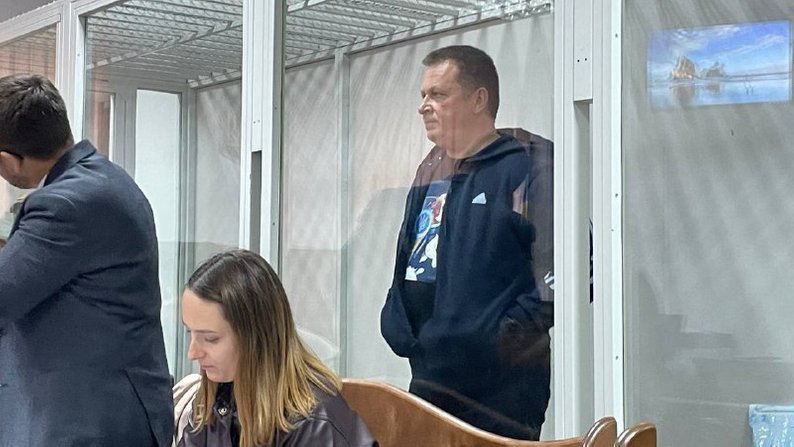
The last known ruling in the case of Vyacheslav Shapovalov is dated April 2, 2024 — since then there have been no changes in pre-trial measures or new motions. According to BlackBox OSINT, he remains in custody, but the case has not moved forward to trial.
As noted earlier, on January 18, 2024, the investigation officially concluded the pre-trial phase, declaring the evidence sufficient to be transferred to court. Yet, as of July 2025, a year and a half later, the case has still not reached trial. There have been no new decisions regarding bail conditions for Shapovalov, Khmelnytskyi, or Fydyna since spring 2024. And there is no record of any hearings on the case itself. This raises a troubling question: have they “settled” matters with investigators and judges, who are now stalling the process?
This suspicion is reinforced by the fact that, despite the seriousness of the charges, law enforcement never seized any of Shapovalov’s movable or immovable assets. Investigators confiscated only samples of substandard equipment and related documents. So where did the money from the scheme go? And how will the state recover the ₴1.4 billion in damages if no assets have been frozen?
This case should have been an example of swift justice, given it involves corruption in the Ministry of Defense during wartime. More than that, it’s about stealing from the army at its most vulnerable moment — the early months of russia’s full-scale invasion, when the military most needed support. Losses of ₴1.4 billion are not just numbers. They represent thousands of faulty vests that failed to protect Ukrainian soldiers. They are funds that could have gone toward weapons or frontline support.
Instead, the case sends a dangerous signal to other corrupt officials: it is possible to profit from the army in wartime and escape punishment.
How Oleh Kulinych Betrayed Ukraine to the FSB — and Why His Case Still Has No Verdict
Oleh Kulinich, former head of the Crimean branch of the Security Service of Ukraine (SBU), has become a symbol of betrayal within Ukraine’s security services. He was arrested in July 2022 on suspicion of treason and collaborating with russian intelligence. Investigators allege that Kulinich, known to the FSB under the codename “Kotyhoroshko”, passed classified information to the russians, sabotaged Ukraine’s defenses, and facilitated the russian invasion. Despite the high-profile arrest and substantial evidence, his case has dragged on for three years without reaching a verdict.
The Security Service of Ukraine and the State Bureau of Investigation accuse Kulinich of treason, espionage, and participation in a criminal organization created by the FSB. From 2019 to 2022, he systematically collected and transmitted state secrets to russian intelligence: informing them about SBU appointments, Ukraine’s defense readiness, and the agency’s operational activities. He relayed this information through his handler, Volodymyr Sivkovych, former deputy secretary of the National Security and Defense Council, who has been hiding in moscow since 2014 and oversees the FSB’s agent network in Ukraine.
Between 2019 and 2022, acting on Sivkovych’s instructions, Kulinich influenced staffing decisions within the SBU, including changes to its organizational structure. These actions directly supported russia’s subversive operations against Ukraine. In 2021, Kulinich oversaw training exercises in Kherson region that, according to investigators, were a cover for gathering intelligence ahead of russia’s planned invasion. He not only spied himself but also recruited other Ukrainians to work for the FSB. Through these agents, he gathered data on Ukraine’s top officials and the SBU’s operations, which were then handed over to moscow.
The most critical episode of his subversive activity occurred on February 24, 2022. At 01:03, in the official “Element” chat, Kulinich received intelligence about russia’s plans to invade from occupied Crimea. Later, in the “Headquarters” chat, after radio interception, he learned that the assault was scheduled for 04:00. Instead of urgently informing SBU leadership, Kulinich merely instructed a subordinate to count enemy vehicles, deliberately concealing crucial information. This allowed russia to launch its invasion successfully and occupy large swathes of Ukrainian territory.
Investigators classify Kulinich’s actions as treason under Article 111 of the Criminal Code of Ukraine, espionage under Article 114, and participation in a criminal organization under Article 255. Criminal case No. 62022080020000039 regarding his betrayal was opened on March 3, 2022, but Kulinich was not arrested until July 16, 2022. On July 18, the Shevchenkivskyi District Court of Kyiv ordered him held in custody without bail. On August 4, the court seized his apartment and parking space, banning their sale or transfer.
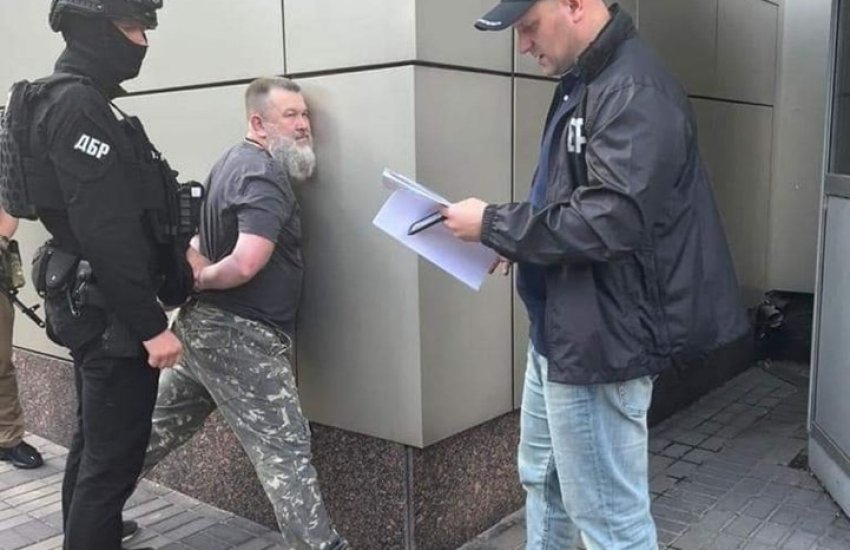
The investigation moved fairly quickly — on April 5, 2023, the prosecutor ruled that the collected evidence was sufficient for an indictment. That same day, Kulinich and his lawyers were granted access to the case materials. By June 29, 2023, the defense had reviewed the documents, and on July 3, 2023, the indictment was submitted to the Pechersk District Court of Kyiv.
Since then, the case has been dragging on in court for two years, with no end in sight. The most recent hearing took place on July 16. According to BlackBox OSINT, Kulinich’s defense constantly files motions, either to change his preventive measure or to disqualify judges, which significantly slows down the proceedings.
For instance, in April 2025, the defense submitted a petition from U.S. citizen James Patrick Bradley, who offered to take Kulinich into his personal custody. The court rejected this request, along with all other attempts to replace detention with house arrest or bail. On April 30, 2025, the defense sought to have the panel of judges recused, but the court denied that motion as well.
All of this, unsurprisingly, wastes time and distracts the court from considering the case on its merits. With this pace, it’s unclear when Ukrainians will finally hear the verdict for a man who actively helped russia occupy southern Ukraine.
How Roman Nasirov Stole Billions from the State and Still Escapes Punishment
Roman Nasirov, former head of Ukraine’s State Fiscal Service (2015–2018) and a member of parliament, has been at the center of corruption scandals for over a decade but has never been punished. He is accused of enabling schemes that cost the state billions of hryvnias. Two key cases, the unlawful tax deferrals granted to companies tied to MP Oleksandr Onyshchenko and bribes for VAT refunds to firms owned by businessman Oleh Bakhmatiuk, have dragged on for years without a verdict. As a result, Nasirov remains free, while his associates live comfortably abroad.
In 2017, Nasirov was detained for abusing his office to benefit Onyshchenko. Investigators say he helped Onyshchenko evade taxes, causing losses of ₴2.019 billion to the state.
As an MP between 2013 and 2016 and deputy head of the parliamentary energy committee, Onyshchenko created a criminal network to illegally enrich himself. He controlled companies operating under joint agreements with Ukrgazvydobuvannia — Nadra Geocenter, Firma KhAS, and KarpatnadraInvest. These firms sold gas at artificially low prices to shell companies, which then resold it at market rates, siphoning profits away from the state budget.
Between January and May 2015, these companies applied for tax deferrals. At that time, State Fiscal Service head Ihor Bilous granted them ₴103 million in deferrals. After Nasirov was appointed head of the SFS in 2015, Onyshchenko brought him into the scheme. According to investigators, Nasirov unlawfully approved tax deferrals for Onyshchenko’s firms, allowing them to avoid paying extraction fees.
Nasirov ordered regional tax authorities in Kharkiv, Poltava, and Dnipropetrovsk to issue favorable rulings for Onyshchenko’s companies regardless of their financial standing. In 2015–2016, these firms submitted false applications citing bankruptcy risks but failed to provide mandatory documents — updated financial reports or recovery plans. They even concealed previously approved deferrals to avoid penalties.
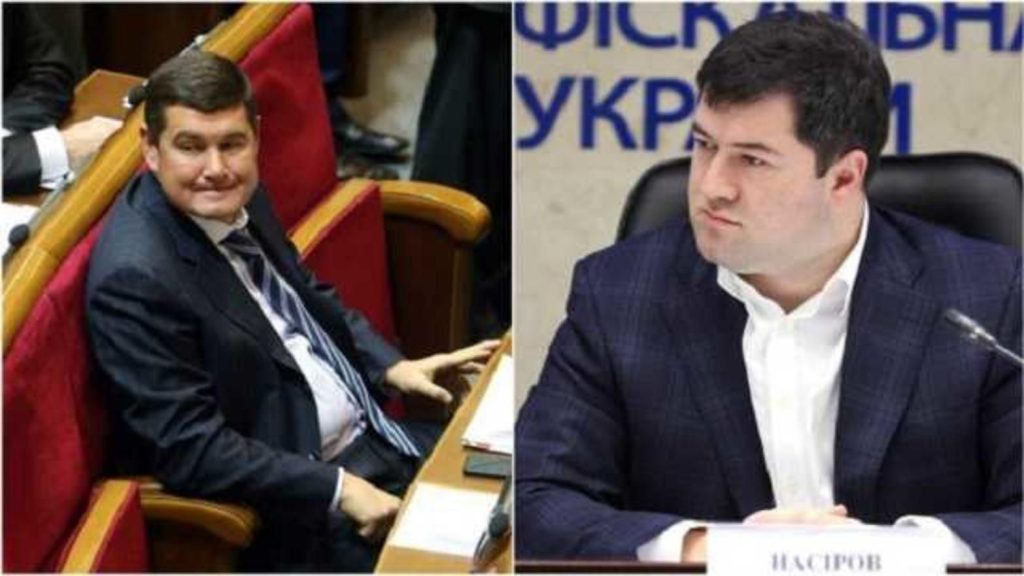
Nasirov not only approved these applications but also falsified the dates of the decisions to cover up overdue payments. In December 2015, without the Finance Ministry’s approval, he extended the payment deadlines for rescheduled debts beyond the budget year. From May 2015 to March 2016, he rescheduled rent payments on natural resources totaling ₴2.019 billion.
In February 2017, NABU detained Nasirov in the “Feofaniya” hospital, fearing he might flee. On March 7, the Solomianskyi District Court placed him under arrest, with bail set at ₴100 million. On March 16, his wife posted the bail, and Nasirov was released. Later, courts kept reducing the bail — down to ₴27 million as of September 2024. Remarkably, each time the bail was lowered, Nasirov’s wife was refunded the difference. Truly, Ukrainian courts can be very “caring”.
On November 10, 2017, the Specialized Anti-Corruption Prosecutor’s Office (SAPO) sent the indictment to court. The case has been dragging on for nearly eight years, finally reaching the stage of court debates, when on April 9, 2025, Nasirov failed to appear in court, claiming he had been “mobilized” into the Armed Forces. After public backlash, the draft order was canceled and an internal investigation was launched. On April 24, 2025, the High Anti-Corruption Court of Ukraine again took Nasirov into custody, setting bail at ₴40 million. The prosecutor did not demand forfeiture of the previous ₴27 million bail to the state, so Nasirov simply added another ₴13 million. On May 9, 2025, he was once again released under personal obligations. The next court hearing is scheduled for August 12, 2025, at 3:00 PM, though it remains to be seen what new tricks the former tax chief will use to avoid punishment.
As for Oleksandr Onyshchenko, the main beneficiary of the scheme, he, like the subject of another of our investigations, MP Andrii Ryba of the European Solidarity party, fled to Germany in 2017, where he obtained residency and has still not been extradited. His case is effectively “frozen”.
How the Courts Help Roman Nasirov, Who Took Over ₴700 Million in Bribes from Oleh Bakhmatiuk
In 2022, Nasirov faced new charges: this time for accepting unlawful benefits in exchange for illegally refunding VAT to companies owned by businessman Oleh Bakhmatiuk. Investigators allege he received ₴722.7 million in bribes for approving VAT refunds totaling ₴3.244 billion.
The scheme worked as follows: with the help of his adviser, Oleksandr Kostenko, Nasirov gave preferential treatment to Bakhmatiuk’s firms — ULF Trade AG and Avonex Limited. Their VAT refund applications were added to the State Fiscal Service’s lists ahead of others, bypassing the usual order. This allowed Bakhmatiuk’s companies to receive funds faster than competitors.
Bribes were funneled through a complex network of offshore companies. Money from Bakhmatiuk’s firms was transferred to shell companies (Ktonel Holdings Limited, Ipson Holdings Limited, Lazer Plus Limited, Shellrock Sales Inc, Sanda Commerce LLP) and then moved into accounts of entities linked to Nasirov, his father-in-law Oleksandr Hlimbovskyi, and Kostenko, including RN Group Limited, Lamagan Ventures Limited, and Newline Leader Ltd.
For example, in August 2015, Nasirov arranged a VAT refund of ₴546.85 million. In return, he received $5.6 million (₴123.2 million at the NBU exchange rate), which was transferred to RN Group Limited under his control. Between December 2015 and February 2016, Nasirov approved VAT refunds worth ₴2.697 billion for Bakhmatiuk’s firms. For this, he was paid €21 million (₴599.5 million), which was split between Lamagan Ventures Limited (controlled by Nasirov’s father-in-law) and Newline Leader Ltd (controlled by Kostenko).
In October 2022, Nasirov was officially charged with bribery. The court ordered pre-trial detention, with bail set at ₴523 million. As is common in Ukraine’s judicial “tradition”, the amount was steadily reduced every two months until it became manageable for him to pay. On May 24, 2024, Nasirov was released after posting just ₴55 million — ten times less than the original amount. Currently, he faces only a travel ban outside Kyiv region and must wear an electronic bracelet.
NABU completed its investigation on February 2, 2023, and the case was handed to the High Anti-Corruption Court on May 24, 2023. Yet more than two years later, the case is still stalled in court with no verdict. It is hard to ignore that Nasirov’s freedom, secured thanks to “generous” judges who reduced his bail from ₴100 million to ₴27 million in the Onyshchenko case, and from ₴523 million to ₴55 million in the Bakhmatiuk case, gives him more room to influence the proceedings in his favor.
Equally, concerning is that in the Bakhmatiuk case, there is no evidence of Nasirov’s assets being seized. Without asset seizures, the possibility of recovering ₴3.244 billion in damages for the state is doubtful.
Justice is further undermined by the fact that both Onyshchenko and Bakhmatiuk fled Ukraine and remain abroad. In all these years, Ukrainian law enforcement has failed to track them down or secure their extradition.
Thus, Roman Nasirov, first detained back in February 2017, has successfully avoided any conviction to this day. His schemes drained Ukraine of ₴5.263 billion, funds that could have supported the army, reconstruction, or critical social needs during wartime. Instead, we are left with Nasirov free and his cases endlessly dragging on in court.
How Ihor Kolomoisky Embezzled Billions and Ordered a Murder, Yet Still Awaits a Verdict
Ihor Kolomoisky, one of Ukraine’s most influential oligarchs, was long seen as untouchable. His name is associated with control over media, banks, and oil companies. But since 2023, he has become the main figure in two major criminal cases. The first concerns the embezzlement of nearly ₴5.9 billion from Ukrnafta and PrivatBank. The second involves the contract killing of lawyer Serhiy Karpenko back in 2003. Despite his arrest, asset seizures, and formal charges, Kolomoisky remains in custody without a verdict, and his cases move slowly through the courts. Why is justice delayed, and will this case mark a turning point in Ukraine’s de-oligarchization?
Between 2012 and 2021, investigators allege Kolomoisky organized a criminal group that embezzled ₴5.877 billion from Ukrnafta, PrivatBank, and Naftokhimik Prykarpattia. He used companies under his control, fake documents, and financial manipulations to siphon and launder funds.
For example, in 2013, Kolomoisky created a fake debt through forged documents. He claimed to have deposited ₴949 million into PrivatBank’s cash desk, though he never did. This allowed him to fabricate a ₴600 million debt supposedly owed by the partly state-owned company Naftokhimik Prykarpattia. In 2020, he demanded repayment of this “debt,” and the company transferred ₴572.2 million to accounts in IBOX Bank and Concord Bank. Kolomoisky then laundered the funds, converting them into €25.5 million and transferring them abroad, to the US, UK, France, and Switzerland, disguised as payments for legal services.
A similar scheme was carried out with Ukrnafta, from which he siphoned off ₴1.6 billion. Through loyal management, Kolomoisky arranged fake contracts with companies like Karpaty Geophysical Works and Gefest Alliance for services that were never provided. Based on falsified documents, Ukrnafta transferred hundreds of millions of hryvnias to these firms, which then funneled the money through PrivatBank and Real Bank.
He is also accused of embezzling ₴2.06 billion from PrivatBank. Kolomoisky and his associates used the bank, then under his control, for fictitious transactions. They disguised non-cash transfers as cash deposits, creating the illusion of legitimate income. The money was cycled through controlled firms and ultimately concentrated in Kolomoisky’s accounts.
But the most shocking case against Kolomoisky is the contract killing. In 2003, he allegedly ordered the murder of lawyer Serhiy Karpenko, who represented shareholders of Dniprospetsstal. The conflict stemmed from a shareholders’ meeting that, according to Kolomoisky, cost him $2 million, as he controlled 33% of the company’s shares.
On July 4, 2003, Kolomoisky met with Karpenko and his colleague Oleh Mihulov in the conference hall of Sentosa Ltd. He demanded they annul the meeting’s decisions, threatening physical retaliation. Karpenko initially agreed to consult with partners, but later refused. Enraged, Kolomoisky instructed his bodyguard, Serhiy Nikitin, to arrange the murder.
Nikitin turned to Viktor Synelshchykov’s gang, notorious for violent crimes. In July 2003, five gang members went to the office of Fargo in Dnipro, where Karpenko worked, but mistakenly attacked another employee, Ihor Kovalenko. On July 8, they beat Kovalenko with pipes and a hammer, leaving him severely injured.
After this failure, Nikitin gave the gang a photo of Karpenko and his car number. In July–August, they surveilled him in Dnipro and near his dacha, but hesitated due to his security detail. Eventually, they tracked him to Feodosiya. On August 16, 2003, gang members, Mamaiev, Synelshchykov, Lekan, Luchynin, and Chichin, ambushed Karpenko near a store. They stabbed him and struck him with a metal rod in the head, chest, and stomach. His wife’s cries disrupted the attack, and Karpenko survived thanks to emergency medical care.
On September 2, 2023, Kolomoisky was detained on suspicion of embezzling ₴572.2 million from Naftokhimik Prykarpattia under criminal case No. 72023000410000034. The court placed him in custody with bail set at ₴509 million.
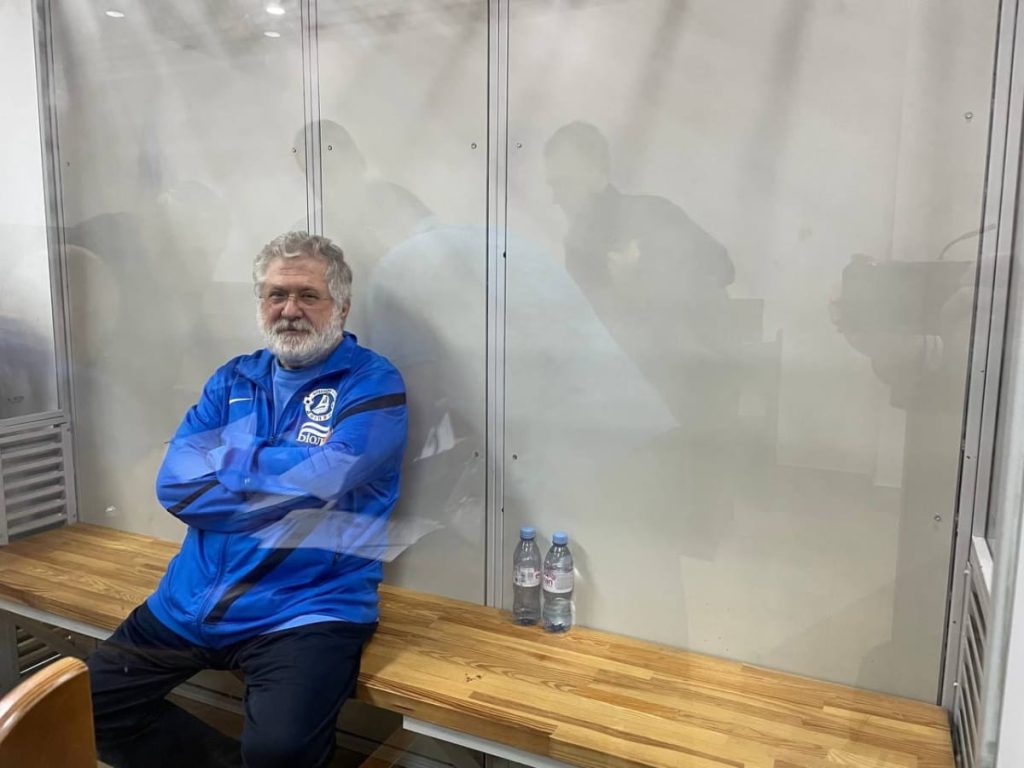
On September 14, 2023, Kolomoisky was served with a new notice of suspicion, adding episodes of embezzling 5.877 billion hryvnias from Ukrnafta and PrivatBank. The next day, September 15, the court increased his bail to 3.891 billion hryvnias, but later, on July 18, 2024, it was reduced to 1.968 billion.
On August 16, 2024, part of the case was separated into a new criminal proceeding, No. 72024000410000019, for investigating the embezzlement of 5.9 billion hryvnias. Just three days later, on August 19, 2024, the pre-trial investigation was completed, and case materials were opened for review. Since then, however, the case has been stuck at this stage, as the court has not set any deadlines for the review process. This raises eyebrows, as a full year has passed without the case moving to trial. Without time limits, Kolomoisky could theoretically review the case materials indefinitely.
As for the contract killing case, Kolomoisky was charged on May 8, 2024. Nearly a year later, on April 23, 2025, prosecutors transferred the indictment to the Pechersk District Court of Kyiv, where the trial has been ongoing since.
Thus, despite the high-profile nature and strong evidence, Kolomoisky’s cases are moving at a snail’s pace. The stalling of his trials is a critical test for Ukraine’s law enforcement and judiciary. If such a powerful figure manages to avoid conviction, it would seriously undermine public trust in justice and the process of de-oligarchization.